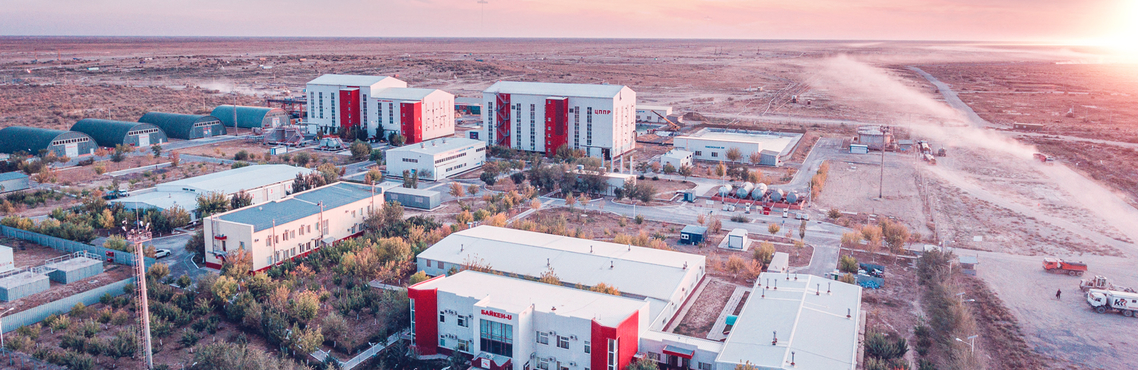
The Baiken-U uranium enterprise, 52.5% owned by Kazatomprom and 47.5% by Japan’s Marubeni, will gradually begin reducing production. This follows from a statement announcing the subsidiary’s planned operations for the Kharasan-2 site and the southeastern flank of the North Kharasan uranium deposit in the Zhanakorgan district of Kyzylorda region.
“This project introduces changes related to a reduction in the planned maximum production capacity of the enterprise. Production volume has been reduced from 1,500 tons to 1,200 tons in 2026, to 1,000 tons in 2027-2028, with a gradual reduction in production indicators thereafter until the remaining reserves accepted for the design are fully exploited,” states the document submitted for public review.
Baiken-U production volumes for 2025 have not yet been published. In 2024, the joint venture produced 1,141 tons of uranium, as previously reported in Kazatomprom’s annual report. As a result, at the beginning of last year, the remaining reserves amounted to 13,100 tons. It can be calculated that, under the new production schedule, by the end of 2028, Baiken-U’s uranium reserves will be approximately 8,000-9,000 tons. Therefore, if production volumes are reduced to 1,000 tons or less, the recoverable reserves at its site could conceivably last for approximately another 10-12 years.
The Baiken-U joint venture’s subsoil use contract is valid until 2055. In 2023, a ninth amendment was made to the contract, amending the work program to reduce the uranium production schedule by partially shortening the production period by years from 2023 to 2035.
“…Considering the current state of the mineral resource base and the existing technological capabilities for developing the Kharasan-2 section of the North Kharasan deposit, it became necessary to optimize design solutions aimed at ensuring the rational and comprehensive use of reserves. In this regard, on August 20, 2025, at the initiative of the Partnership, a meeting was held with shareholders to discuss adjusting production capacity, envisaging its reduction starting in 2026. Implementing these project adjustments will optimize the deposit’s development schedule and extend the plant’s lifespan by approximately five years. This, in turn, will contribute to maintaining social stability in the region by ensuring long-term employment and the sustainable operation of the production infrastructure,” the documentation explains.
Baiken-U is one of the largest taxpayers in the Kyzylorda region. According to media reports, the company paid 46.8 billion tenge in taxes last year. Budget revenues in this southern region are falling due to declining oil production.
In the coming years, Kazatomprom and China’s SNURDC will deplete their uranium reserves at the Zarechnoye joint venture in the Otrar district of the Turkestan region. At the end of 2024, these reserves stood at 2,500 tons. This subsoil use contract expires in 2028. In 2026, following the expiration of the mining rights, the Akdala deposit, located in the Sozak district of the same region, will be transferred to the full trust management of the national uranium company from the Southern Mining and Chemical Company (SMCC), where Rosatom is a 70% majority shareholder. The Akdala deposit is projected to contain approximately 1,500 tons of undeveloped uranium reserves, requiring continued development until 2030.
As a reminder, this year, enterprises with Kazatomprom’s participation plan to mine uranium in the amount of 27.5 to 29 thousand tons.